


Learn how kinesiology tape can help support and relieve your Achilles tendon
Follow our step-by-step kinesiology taping guide to support the Achilles tendon, relieve pain above the heel, and aid recovery — at home.

Would you like to learn how to tape your Achilles tendon yourself? In this guide, we explain step by step how to do it.
Achilles tendon issues are particularly common among runners, but carrying excess weight or having poor foot alignment can also trigger pain in this area. The discomfort is usually felt a few centimetres above the heel and, in some cases, the tendon may appear swollen or thickened. The taping method described below can provide active support and a degree of stability for the tendon.
In addition, it is strongly recommended to combine taping with targeted strengthening exercises for the Achilles tendon.
Jump to: Preparation · Measuring & cutting · Application
-

MyCureTape® Sports 3-Roll Combi Pack
€17,95In stockSelect options This product has multiple variants. The options may be chosen on the product page
This taping method may help with:
Relieve pain
Reduce strain on the irritated Achilles tendon
Support the tendon
Active stabilisation along the Achilles tendon
Reduce swelling
Gentle compression around a thickened tendon
Improve movement
More comfortable walking and running during recovery
It can be applied for:
Achilles tendonitis
Inflammation of the Achilles tendon from overuse
Achilles tendinopathy
Chronic tendon pain and thickening above the heel
Runner’s Achilles pain
Overuse pain from running, especially on hard surfaces
Post-activity heel pain
Stiffness and soreness after prolonged standing or exercise
Self-taping the Achilles tendon
Tips on how to successfully tape your Achilles tendon:
Is the cause of the pain or discomfort clearly identified?
Always read the instructions carefully before you start taping.
Select the tape colour of your choice.
Do not apply any stretch at the beginning or end of the tape.
Rub the tape firmly after application to improve adhesion.
Check for any contraindications before using tape.
On average, the tape will remain in place for 3–7 days.
Showering is possible while wearing the tape.
Removing the tape is easier when using a little oil.
Preparing to tape the Achilles tendon
- Shape
- 1 customised I-strip.
- Number of strips
- 1
- Technique
- Ligament technique (relaxing application applied with firm stretch)
Measuring and cutting the tape
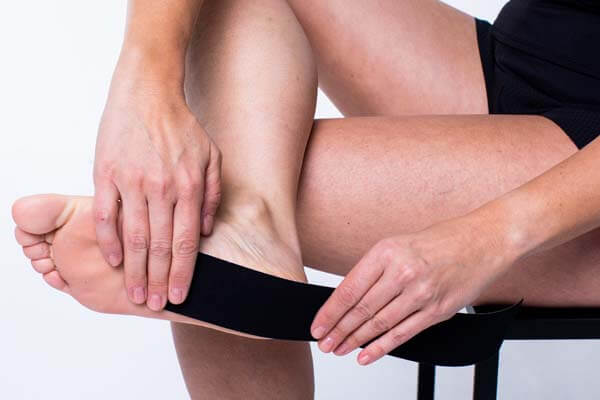
Measure & Cut
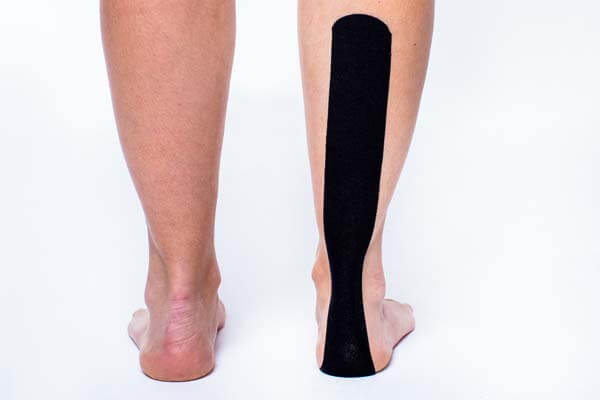
- Sit on a stool and measure the length of the tape from the bottom of the heel up to the midpoint of the calf. Keep in mind that the tape will become noticeably longer once stretched during application.
Applying the tape to the Achilles tendon
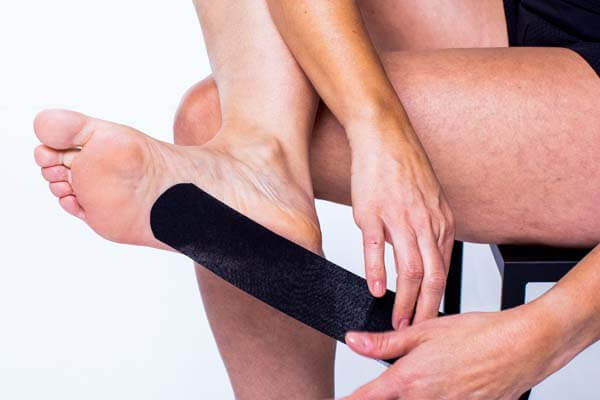
Anchor at the heel
- Place the anchor at the bottom of the heel without applying any stretch.
- Peel off the backing paper, leaving the final centimetre attached.
- Slightly bend the affected leg and pull your toes upwards.
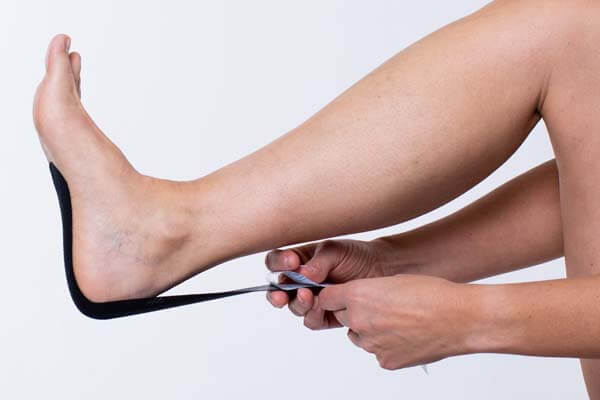
Apply with strong stretch
- Apply the tape firmly over the Achilles tendon with a strong stretch, keeping it smooth and wrinkle-free.
- From the middle of the calf, gradually reduce the tension and finish without stretch at the back of the knee.
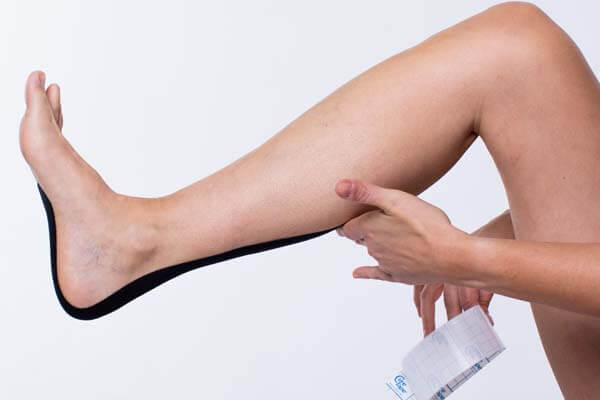
Avoid the knee crease
- Do not let the tape end in the crease of the knee, as the skin in this area is sensitive and may become irritated.
Secure and activate
- Secure the tape by rubbing it vigorously to activate the adhesive.
- Combine taping with targeted strengthening exercises for the best long-term result.
Popular products to tape your foot
-

CureTape® Classic
€9,95In stockSelect options This product has multiple variants. The options may be chosen on the product page -
CureTape® Art
€10,95In stockSelect options This product has multiple variants. The options may be chosen on the product page -
CureTape® Sports Extra Sticky
€10,95In stockSelect options This product has multiple variants. The options may be chosen on the product page -
CureTape® Soft Touch Scissor
€12,95In stockAdd to cart



 Trusted by professionals for 25+ years
 Europe-wide shipping
Free delivery from €100
Europe-wide shipping
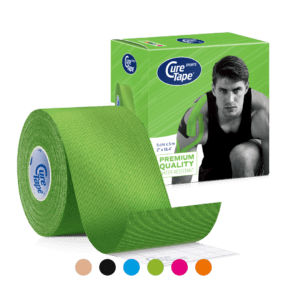
Free delivery from €100 When taping your foot, using a kinesiology tape that stays firmly in place is crucial, as sweat, movement, and friction from shoes can easily cause standard tape to loosen. That is why I personally recommend CureTape Sports; its 30% stronger adhesion ensures it stays on much longer during daily activities and sports.
For these self-taping instructions, I have selected applications that are straightforward to perform on your own. To ensure the treatment is carried out safely, I share practical tips to keep in mind before, during and after applying the tape. These recommendations are drawn from my many years of clinical experience. For a quicker recovery, combine taping with specific exercises for the Achilles tendon. If your symptoms persist, always seek advice from a physiotherapist or your GP.

Disclaimer: Please note: the suggested tape applications and the information on our website regarding the possibilities of the Medical Taping Concept are not yet scientifically proven. The stated claims are based primarily on extensive experience from therapists and users of CureTape® products. No rights can be derived from the content on this website.
Contraindications for not using tape: pregnancy, open wounds, bone fractures, unexplained complaints, allergies and skin conditions, medication use such as blood thinners, thrombosis, and fever. Always consult a medical professional if in doubt.