


Learn how to use CrossLinq (Crosstape) patches
Small grid patches, big effect — discover how to apply CrossLinq yourself.

CrossLinq grid patches are small but remarkably effective!
Curious to learn how these unique Crosstape patches work and for which types of discomfort they can be used? In this article, we explain how CrossLinq functions and share several practical examples of its applications for common complaints.
CrossLinq patches are a specialised type of Crosstape – small, skin-coloured adhesive grids designed for targeted treatment. Originating from Asia, they have been used for many years to support acupuncture points and energy meridians. Today, they are also widely applied to pain points, scars and lymphatic areas. Each CrossLinq patch is skin-toned, rectangular, non-elastic and shaped like a fine mesh. They are available in three different sizes, with the medium version (2.5 cm × 2 cm) being the most popular. The grid consists of four vertical and three horizontal strips that intersect. CrossLinq is hypoallergenic, water-resistant, intended for single use, and typically stays in place for several days up to a week.
Jump to: How to apply · Examples & applications
-

MyCureTape® Sports 3-Roll Combi Pack
€17,95In stockSelect options This product has multiple variants. The options may be chosen on the product page
CrossLinq may help with:
Targeted relief
Pinpoint application directly on the point of discomfort
Acupressure support
Based on traditional acupuncture points and meridians
Discreet on the skin
Skin-coloured and small, so it’s hardly noticeable
Water-resistant
Stays in place for several days up to a week
It can be applied for:
Jaw and facial pain
Discomfort around the jaw joint and face
Headache and dizziness
Common pressure points for head-related discomfort
Nerve discomfort
Numbness or tingling in the arm, hand or fingers
Menstrual discomfort
Support for period-related pain and tension
Tips for a successful CrossLinq application:
Gently peel back one side of the protective paper, then lift the patch from the other side using a wooden stick or plastic tweezers.
Slowly move the patch over the affected or painful area. Wait until you feel it naturally “pull” towards a specific spot, then apply it there.
If the patch doesn’t adhere properly or seems to be repelled by the skin, do not force it in that position. Scan the area again and let the patch find the correct point.
This method may sound unusual, but the idea is that the patches locate the area of disturbance through an opposite electrostatic charge. Simply give it a try and experience the effect for yourself.
Applying a CrossLinq patch
Applying CrossLinq patches is quick and straightforward. Simply place the small grid plaster directly onto the area you wish to treat. For best results, it’s recommended to apply the patch at a 45-degree angle in relation to the muscle’s direction. Before applying, make sure to handle the patch with a non-conductive tool and avoid touching the adhesive surface with your fingers as much as possible.
A wooden stick or plastic tweezers works perfectly for this.
CrossLinq – examples and applications
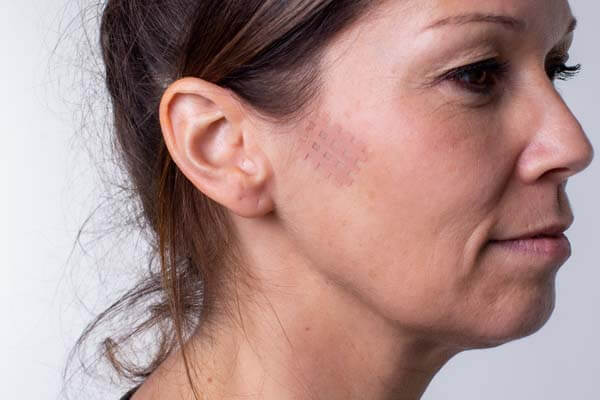
Jaw pain
Using tweezers, apply the CrossLinq patch diagonally onto the sore area next to the ear, directly over the jaw joint. Make sure it sits smoothly on the skin without any folds for the best adhesion and comfort.
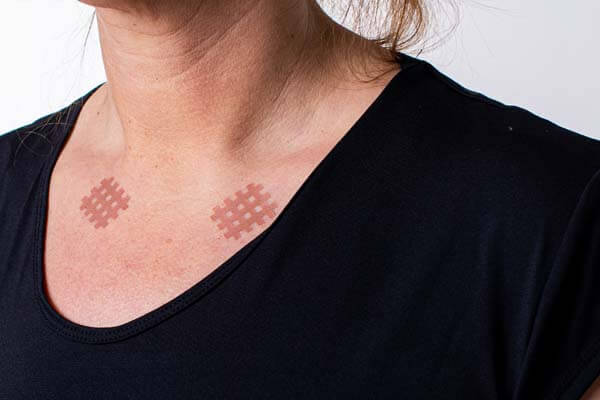
Neck pain
Apply two CrossLinq® patches just above the collarbone, positioning one on each side of the neck.
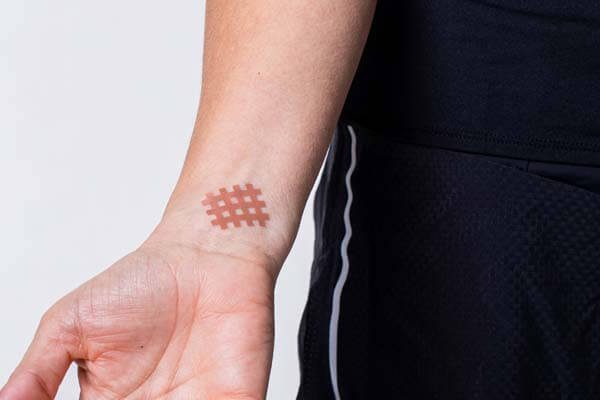
Nausea and vomiting
Place one CrossLinq® patch diagonally on the inner side of your forearm, about two finger widths away from the wrist crease. This point is traditionally used to help relieve nausea and calm the stomach.
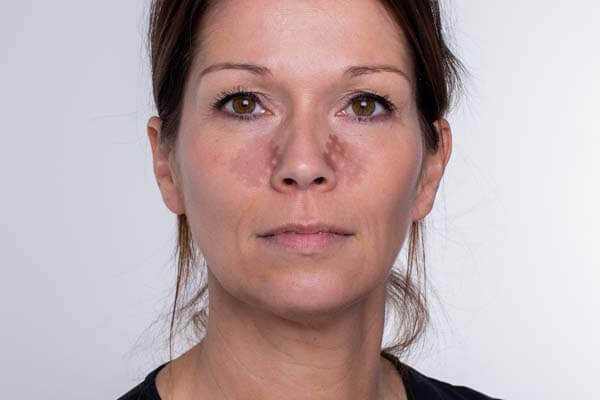
Colds, inflamed mucous membranes or sinus congestion
Apply the CrossLinq® patches diagonally on both sides of the nose, positioning them just next to the nostrils.
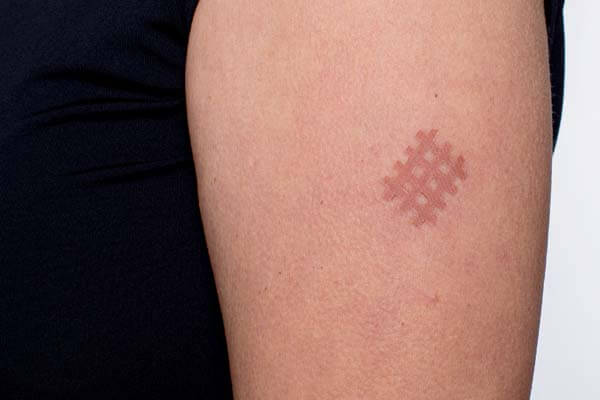
Nerve discomfort at the back of the forearm or in the palms
Apply the CrossLinq® patch diagonally about one hand’s width below the shoulder.
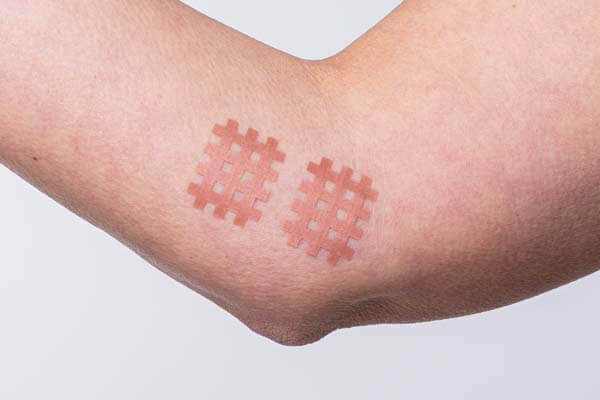
Nerve discomfort on the inner arm, numbness or tingling in the fingers
Apply two CrossLinq® patches. Place the first one along the skin fold that appears when you bend your arm. Position the second patch roughly one finger’s width further down the arm.
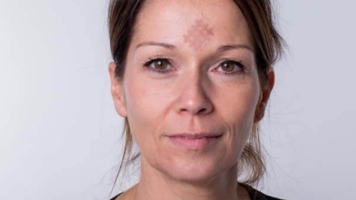
Headache – pressure point between the eyebrows
One pressure point for headache relief is located between the eyebrows, while another lies at the temple. Try gently scanning both areas to see where the CrossLinq® patch naturally adheres, and apply it to that spot for best results.
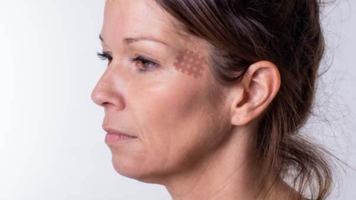
Headache – pressure point at the temple
Here you can see the pressure point located at the temple.
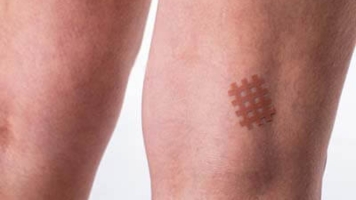
Menstrual discomfort
Apply the CrossLinq® patches to the outer sides of the back of the knees, one on each leg.
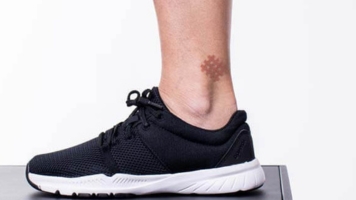
General point for headaches, dizziness and neck tension
This point is located beside the outer ankle joint, between the ankle bone and the Achilles tendon. You can apply the CrossLinq® patch on one or both feet.
Avoid using this point during pregnancy.
Popular CrossLinq products
-

CureTape® Classic
€9,95In stockSelect options This product has multiple variants. The options may be chosen on the product page -
CureTape® Art
€10,95In stockSelect options This product has multiple variants. The options may be chosen on the product page -
CureTape® Sports Extra Sticky
€10,95In stockSelect options This product has multiple variants. The options may be chosen on the product page -
CureTape® Soft Touch Scissor
€12,95In stockAdd to cart




 Trusted by professionals for 25+ years
 Europe-wide shipping
Free delivery from €100
Europe-wide shipping
Free delivery from €100 To give you an idea of what’s possible with CrossLinq patches, I’ve shared several examples above. In general, you can easily treat most types of pain points yourself using these small grid plasters. These include areas that radiate pain or spots that feel sensitive when pressed. Because the patches are skin-coloured, they are hardly noticeable and can even be applied safely to the face. Give it a try and experience the difference for yourself!

Disclaimer: Please note: we emphasize that the suggested tape applications and the information on our website regarding the possibilities of the Medical Taping Concept are not yet scientifically proven. The statements and examples mentioned are based on years of experience from patients and trained therapists.
Contraindications for not using tape: pregnancy, open wounds, bone fractures, unexplained complaints, allergies and skin conditions, medication use such as blood thinners, thrombosis, and fever. Always consult a specialist before applying tape in these cases.
Bulk order
Trusted by professionals for 25+ years
Europe-wide shipping
Free delivery from €100