


Learn how to relieve forefoot pain with kinesiology tape
Follow our step-by-step kinesiology taping guide — at home.

Do you want to know how to easily tape a painful forefoot yourself? In this guide we’ll show you step by step how to do it.
Pain in the sole of the foot can have several causes. In most cases it’s the result of overuse, for instance from wearing narrow high heeled shoes or walking for long periods on uneven surfaces. A weakened forefoot arch (commonly known as splayfoot) may also lead to strain and pain in the ball of the foot. Applying kinesiology tape can reduce this pressure and ease the discomfort in the forefoot area.
Jump to: Preparation · Measuring & cutting · Application
-

MyCureTape® Sports 3-Roll Combi Pack
€17,95In stockSelect options This product has multiple variants. The options may be chosen on the product page
This taping method may help with:
Relieve pain
Reduce tension and discomfort in the affected area
Support the tissue
Gentle stabilisation during movement and recovery
Improve movement
More comfortable daily activities during recovery
Support recovery
Allow overloaded tissue to recover while staying active
It can be applied for:
Overuse complaints
Pain from repetitive strain or prolonged activity
Acute injury support
Additional stability after sudden strain or sprain
Sports-related pain
Support during training and return to sport
Daily discomfort
Relief during walking, standing, or daily tasks
Self taping for a painful forefoot
Tips to make forefoot taping more effective:
Be sure you understand the cause of your foot pain before you start.
Go through the instructions carefully first.
Choose the tape color you prefer.
Do not stretch the tape at the beginning or the end.
Rub the tape firmly so it sticks well.
Check if there are any reasons why taping might not be suitable for you.
On average, the tape will stay in place for 3–7 days.
Showering is fine while wearing the tape.
Removing the tape is easier if you use a little oil.
Preparation for taping a painful forefoot
- Shape
- 3 customized I-strips
- Number of strips
- 3
- Technique
- ligament method (applied with full stretch to relieve tension).
Measuring and cutting the tape
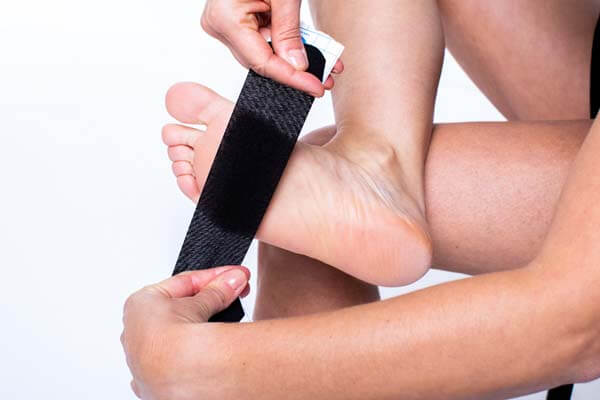
Measure & Cut
- Sit on a stool and place the foot you want to tape on top of your other knee.
- Measure the length of the first two strips from the ball of the big toe across to the ball of the little toe.
- For the third strip, measure from the base of the toes, underneath the sole, across the Achilles tendon, and up to just above the heel.
Applying the tape to the forefoot
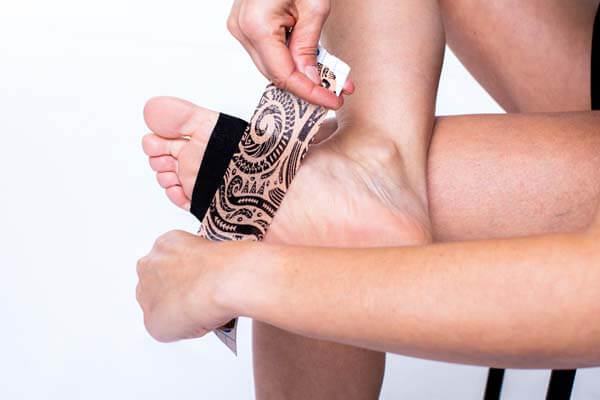
Step 2
- Tear the backing paper in the middle of the first strip and fold it back on both sides.
- Apply the center section firmly under the toes with maximum stretch, while pulling the toes slightly toward your body.
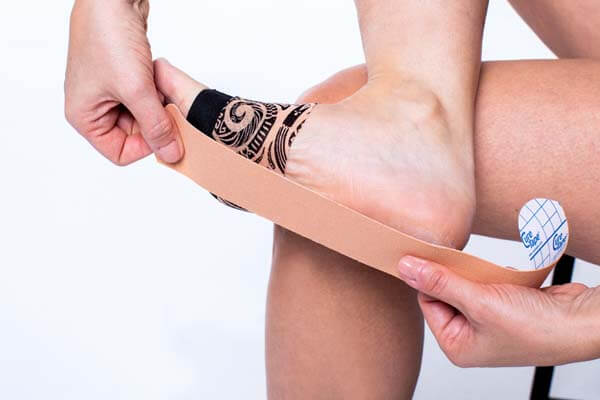
Step 3
- Fix the two ends of the strip on top of the foot without any stretch.
- Apply the second strip in the same way, overlapping the first by about 2 cm.
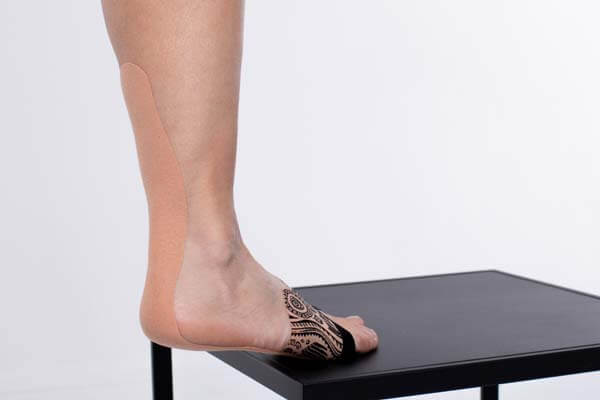
Step 4
- Place the base of the third strip without tension at the base of the toes and run it lengthwise. Pull the toes toward you and apply the tape with about 50% stretch across the sole, up over the Achilles tendon, and secure the anchors above the heel without stretch.
- Finally, rub the tape gently to make sure it sticks well.
Popular products to tape your foot
-
MyCureTape® Sports 3-Roll Combi Pack
€17,95In stockSelect options This product has multiple variants. The options may be chosen on the product page -

CureTape® Soft Touch Scissor
€12,95In stockAdd to cart -
FASCIQ® Pre Tape Adhesive Spray
€11,95In stockAdd to cart -
MyCureTape® Sports Pre-Cut (36 pcs)
€19,95In stockAdd to cart


 Trusted by professionals for 25+ years
 Europe-wide shipping
Free delivery from €100
Europe-wide shipping
Free delivery from €100 When taping your foot, using a kinesiology tape that stays firmly in place is crucial, as sweat, movement, and friction from shoes can easily cause standard tape to loosen. That is why I personally recommend CureTape Sports; its 30% stronger adhesion ensures it stays on much longer during daily activities and sports.
To help you get the best results, I have selected practical, easy-to-follow self-taping applications alongside a few valuable tips from clinical experience. For an optimal recovery, remember to combine this taping with specific exercises for your injury, and always consult a physiotherapist or GP if your symptoms persist.
For the self-taping instructions, I have selected techniques that you can carry out on your own without much effort. To help you apply the tape safely and with confidence, I have included several practical points to keep in mind before, during and after taping. These suggestions are drawn from my extensive experience working with patients in the clinic. If your symptoms persist or worsen, always seek advice from a therapist or your GP.

Disclaimer: Please note: the suggested tape applications and the information on our website regarding the possibilities of the Medical Taping Concept are not yet scientifically proven. The stated claims are based primarily on extensive experience from therapists and users of CureTape® products. No rights can be derived from the content on this website.
Contraindications for not using tape: pregnancy, open wounds, bone fractures, unexplained complaints, allergies and skin conditions, medication use such as blood thinners, thrombosis, and fever. Always consult a medical professional if in doubt.