


Learn how to relieve facial pain with kinesiology tape
Follow our step-by-step kinesiology taping guide to relieve facial pain, reduce muscle tension, and support recovery — at home.
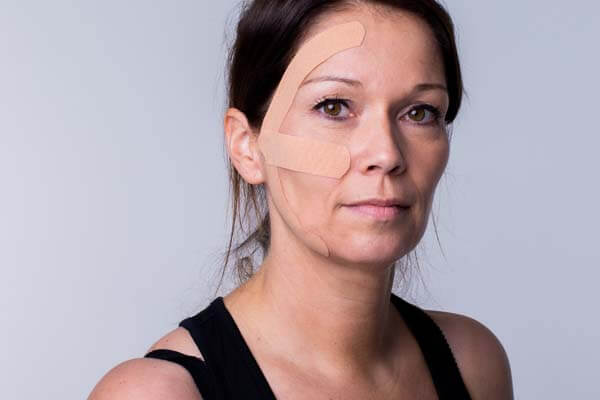
Do you want to learn how to tape for facial pain on your own? In this article we’ll guide you step by step through the process.
Facial pain can have various causes — from tension in the jaw and chewing muscles, to nerve irritation or headaches originating from the neck and jaw region. Kinesiology tape can be used to gently relax overloaded facial muscles, reduce tension, and improve comfort during daily activities such as chewing, speaking, or yawning.
This taping method uses short strips applied along the affected facial muscle groups. CureTape Beauty — a thin, skin-toned tape developed specifically for use on the face — is recommended for this application. Always perform a small skin test first, as facial skin can be more sensitive than other areas. If you are unsure about the cause of your facial pain, always consult a healthcare professional first.
Jump to: Preparation · Measuring & cutting · Application

This taping method may help with:
Relieve pain
Reduce tension in the facial muscles
Improve mobility
More comfortable chewing, yawning, and speaking
Relax the muscles
Ease overloaded jaw and cheek muscle groups
Support recovery
Allow facial muscles to recover during daily use
It can be applied for:
Facial muscle tension
Tightness or pain in the cheek and jaw muscles
Headaches from facial tension
Tension headaches linked to jaw muscle overload
Chewing muscle pain
Discomfort in the masseter or temporalis muscles
Post-procedure sensitivity
Gentle support after dental or facial procedures
Tips to ensure your taping treatment goes smoothly:
Always consult a professional first if you are unsure about the cause of your facial pain.
Perform a small skin patch test before applying tape to the face.
Use CureTape Beauty — a thin, skin-toned tape designed for sensitive facial skin.
Do not apply stretch at the beginning and end of the tape.
Apply the tape gently — do not pull or stretch the facial skin.
On average, face tape stays in place for 1 to 3 days.
Remove carefully using a little oil to avoid skin irritation.
If irritation occurs, remove the tape immediately.
Preparation before taping for facial pain
- Shape
- Short I-strips of 5–10 cm applied along the affected muscle group. Round all ends. CureTape Beauty (2.5 cm wide, skin-toned) is recommended.
- Number of strips
- 2–3 depending on the affected area
- Technique
- Muscle technique — light tension along the muscle belly; anchors without stretch. Applied in relaxed facial position.
Measuring and cutting the tape
Cut 2–3 short strips of 5–10 cm along the affected muscle group. Round all ends. CureTape Beauty (2.5 cm wide, skin-toned) is recommended for facial taping.
Applying the tape for facial pain
Keep the face in a relaxed, neutral position. Apply the tape gently — do not pull or stretch the facial skin. Always anchor without stretch at both ends.
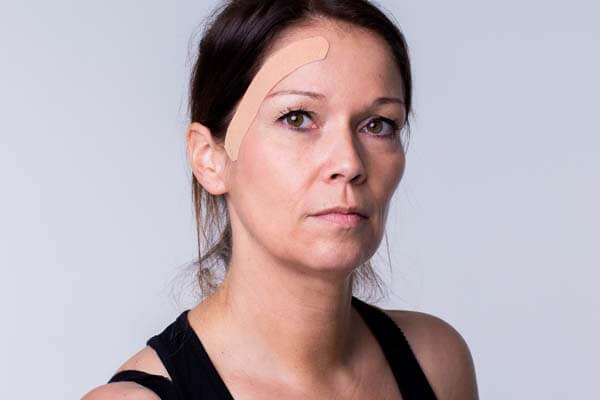
Locate the painful muscle
- With the face relaxed, locate the painful or tight muscle group (e.g. masseter on the cheek, or temporalis at the temple).
- Gently place the anchor of the first strip without stretch at the lower end of the muscle.
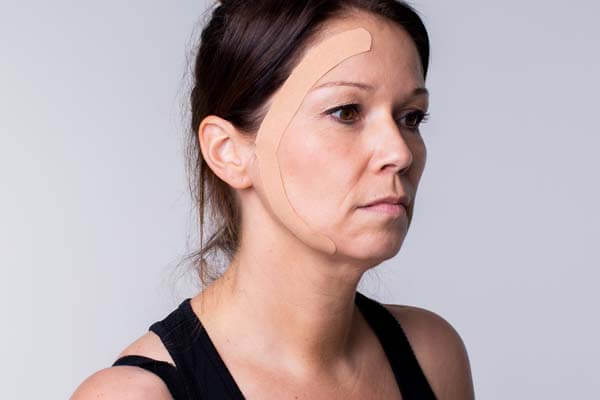
Apply with light tension
- Apply the tape with light tension along the muscle belly toward its upper attachment.
- Secure the top anchor without stretch. Rub gently to activate the adhesive.
Apply additional strips
- Apply additional strips alongside the first as needed, for broader coverage of the affected area.
- Rub all strips gently. The tape should feel like a light supportive lift on the skin.
Popular products to tape your face

 Trusted by professionals for 25+ years
 Europe-wide shipping
Free delivery from €100
Europe-wide shipping
Free delivery from €100 When taping your face, it’s crucial to choose a tape that provides strong adhesion and support. That’s why I recommend CureTape kinesiology tape. For regular use, CureTape Classic or Beauty or Art is ideal. However, if you’re engaging in extreme sports or swimming, opt for the extra sticky CureTape Sports variant! I have selected practical, easy-to-follow self-taping applications alongside a few valuable tips from clinical experience. For an optimal recovery, remember to combine this taping with specific facial exercises or relaxation techniques, and always consult a physiotherapist or GP if your symptoms persist.

Disclaimer: Please note: the suggested tape applications and the information on our website regarding the possibilities of the Medical Taping Concept are not yet scientifically proven. The stated claims are based primarily on extensive experience from therapists and users of CureTape® products. No rights can be derived from the content on this website.
Contraindications for not using tape: pregnancy, open wounds, bone fractures, unexplained complaints, allergies and skin conditions, medication use such as blood thinners, thrombosis, and fever. Always consult a medical professional if in doubt.