


Learn how kinesiology tape can help relieve elbow bursitis
Follow our step-by-step kinesiology taping guide to relieve swelling and pain at the tip of the elbow caused by bursitis (student’s elbow) — at home.

Do you notice a painful swelling at the tip of your elbow?
Elbow bursitis — also known as student’s elbow or olecranon bursitis — is caused by inflammation of the bursa, a small fluid-filled sac located at the tip (olecranon) of the elbow. It often develops after repeated knocks to the elbow, prolonged leaning on a hard surface, or continuous pressure on the area. The result is a visible, often painful swelling at the back of the elbow joint.
This taping method uses an X-strip applied over the swollen area with a light stretch. The decompressive effect gently lifts the skin, creates space, and helps reduce swelling and discomfort. For quicker recovery, combine taping with stretching and mobility exercises. If symptoms persist, always consult a physiotherapist.
Jump to: Preparation · Measuring & cutting · Application
-

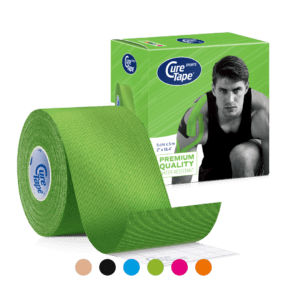
CureTape® Art
€10,95In stockSelect options This product has multiple variants. The options may be chosen on the product page
This taping method may help with:
Reduce swelling
Gentle decompression over the inflamed bursa
Relieve pain
Reduce pressure on the olecranon bursa
Improve movement
More comfortable bending and straightening the elbow
Support recovery
Allow the bursa to recover during daily activity
It can be applied for:
Elbow bursitis (olecranon bursitis)
Swelling and pain at the tip of the elbow joint
Student’s elbow
Bursitis from prolonged leaning on a desk or hard surface
Post-impact swelling
Fluid build-up after repeated knocks to the elbow
Elbow irritation
Soreness and tenderness at the olecranon
Self-taping for elbow bursitis
Tips to ensure your taping treatment goes smoothly:
Read through the instructions carefully before you begin taping.
Select the tape colour you prefer.
Do not apply stretch at the beginning and end of the tape.
It is advisable to have someone assist you when taping the elbow.
Rub the tape well after application to activate the adhesive.
On average, the tape will remain in place for 3 to 7 days.
You can shower while wearing the tape.
Removing the tape is easier when using a little oil.
Preparation before taping elbow bursitis
- Shape
- One X-strip cut from a piece of tape about 15 cm long. Leave a center section intact (~5 cm) and cut toward both ends to create four tails. Round off all corners.
- Number of strips
- 1
- Technique
-
Decompression / ligament technique
— light stretch through the center over the swollen area; all four anchors without stretch.
Measuring and cutting the tape

Measure & Cut
- Cut a piece of tape approximately 15 cm long.
- Leave a center section of ~5 cm intact and cut from both ends toward the center to create four tails (X-shape). Round off all four corners.
Applying the tape for elbow bursitis
Keep the elbow bent during the full application. It is advisable to have someone assist you to ensure the X-strip is positioned correctly over the swollen tip of the elbow.
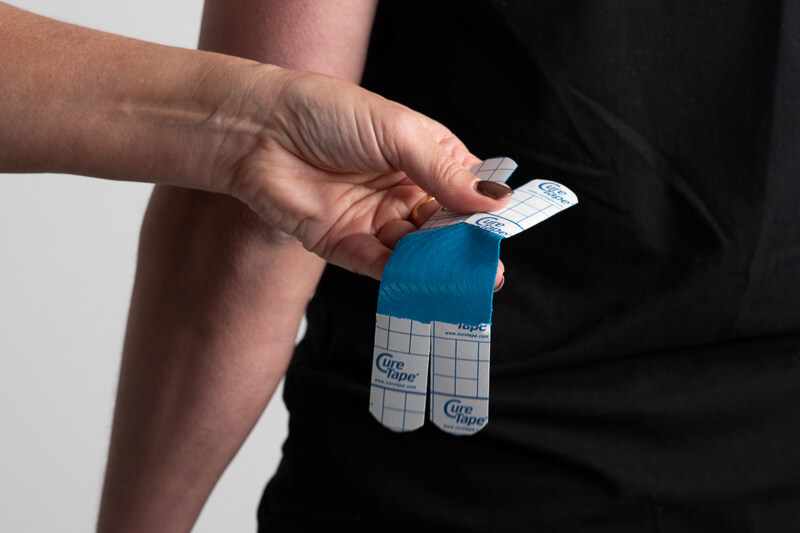
Step 2
- Tear the backing paper at the junctions leading to the four ends and remove it from the centre section.
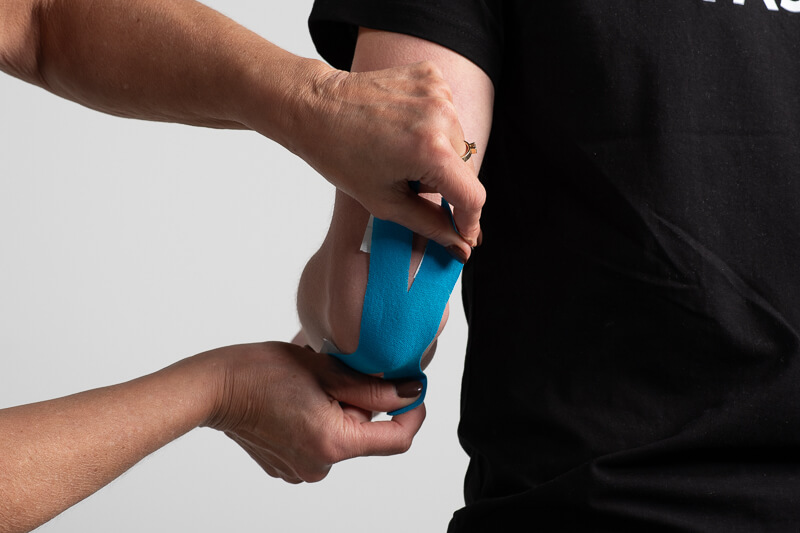
Step 3
- Keep the elbow bent and apply the central part of the tape with a light stretch across the tip of the joint.
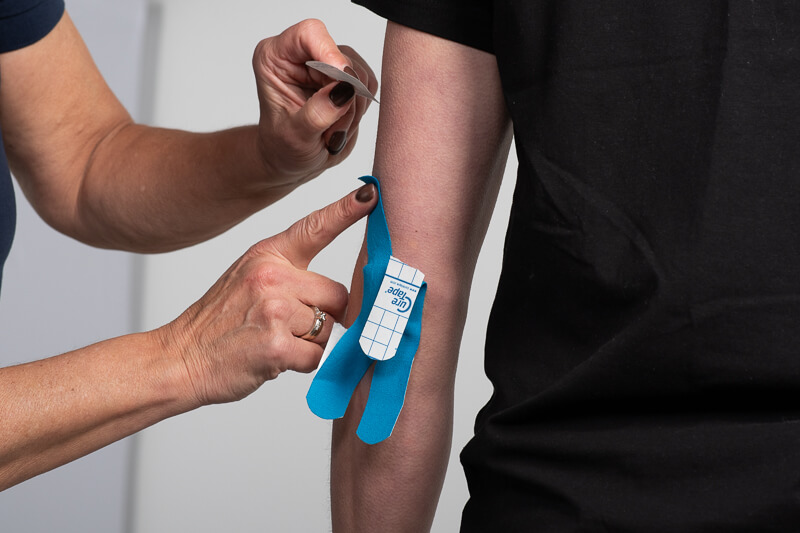
Step 4
- Gradually reduce the stretch and lay the tape down smoothly.
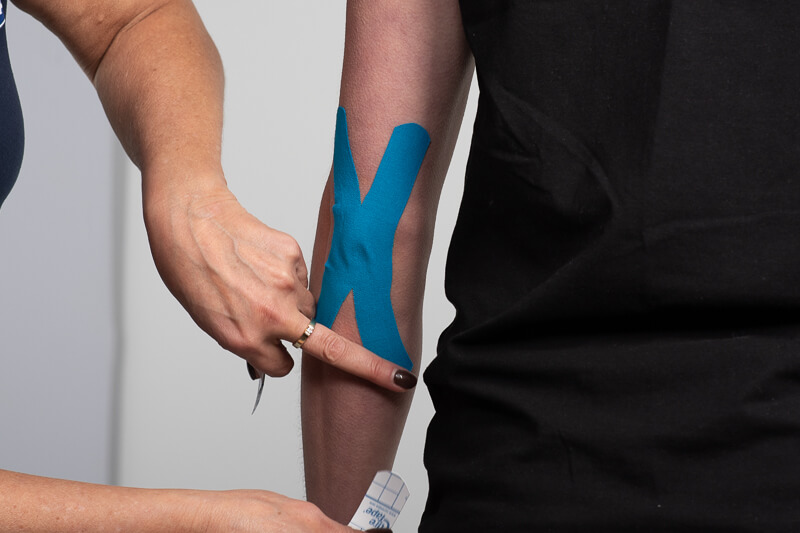
Step 5
- Apply the four anchors without any stretch and rub the tape firmly to ensure secure adhesion.
Popular products to tape your elbow
-

CureTape® Classic
€9,95In stockSelect options This product has multiple variants. The options may be chosen on the product page -
CureTape® Art
€10,95In stockSelect options This product has multiple variants. The options may be chosen on the product page -
CureTape® Sports Extra Sticky
€10,95In stockSelect options This product has multiple variants. The options may be chosen on the product page -
CureTape® Soft Touch Scissor
€12,95In stockAdd to cart


 Trusted by professionals for 25+ years
 Europe-wide shipping
Free delivery from €100
Europe-wide shipping
Free delivery from €100 When taping your elbow, it’s crucial to choose a tape that provides strong adhesion and support. That’s why I recommend CureTape kinesiology tape. For regular use, CureTape Classic or Art is ideal. However, if you’re engaging in extreme sports or swimming, opt for the extra sticky CureTape Sports variant! I have selected practical, easy-to-follow self-taping applications alongside a few valuable tips from clinical experience. For an optimal recovery, remember to combine this taping with specific elbow and forearm exercises, and always consult a physiotherapist or GP if your symptoms persist.

Disclaimer:
Please note: the suggested tape applications and the information on our website regarding the possibilities of the Medical Taping Concept are not yet scientifically proven. The stated claims are based primarily on extensive experience from therapists and users of CureTape® products. No rights can be derived from the content on this website.
Contraindications for not using tape:
pregnancy, open wounds, bone fractures, unexplained complaints, allergies and skin conditions, medication use such as blood thinners, thrombosis, and fever. Always consult a medical professional if in doubt.
Bulk order
Trusted by professionals for 25+ years
Europe-wide shipping
Free delivery from €100