


How to tape shoulder pain or injuries
Looking for a clear explanation on how to tape your shoulder? This taping method supports the shoulder and helps relieve pain during movement.

How kinesiology tape can help with shoulder pain
On this page you will find the step-by-step taping instruction for shoulder complaints. The guide includes photos, preparation steps, measuring & cutting instructions, and a video.
CureTape kinesiology tape is used by physiotherapists and sports professionals worldwide. Whether you are dealing with shoulder pain, discomfort in the upper arm or reduced mobility — this taping method is easy to do yourself without prior experience.
Jump to:
Taping guides ·
Recommended products ·
Expert advice
-

MyCureTape® Sports 3-Roll Combi Pack
€17,95In stockSelect options This product has multiple variants. The options may be chosen on the product page
Shoulder taping instructions

How to tape your shoulder (general)
If you’re experiencing discomfort in the upper arm or shoulder joint area, applying this taping technique can have a relaxing and pain-relieving effect.
Tip: If your shoulder muscles are weak, apply the tape in the opposite direction for optimal support.
Popular products to tape your shoulder
-

FASCIQ® Pre Tape Adhesive Spray
€11,95In stockAdd to cart -
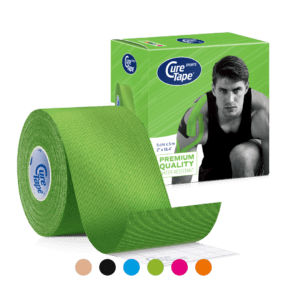
CureTape® Sports Extra Sticky
€10,95In stockSelect options This product has multiple variants. The options may be chosen on the product page -
MyCureTape® Sports 3-Roll Combi Pack
€17,95In stockSelect options This product has multiple variants. The options may be chosen on the product page -

CureTape® Soft Touch Scissor
€12,95In stockAdd to cart
 Trusted by professionals for 25+ years
 Europe-wide shipping
Free delivery from €100
Europe-wide shipping
Free delivery from €100 For most shoulder complaints, I recommend CureTape Classic. It supports your shoulder during everyday activities and moves naturally with your body. If you play sports or need extra support, I recommend CureTape Sports. Its 25% stronger adhesion helps the tape stay in place during exercise and daily movement. Try to combine taping with shoulder mobility and strengthening exercises for the best results. If your symptoms persist or worsen, consult a physiotherapist or your GP.

Disclaimer: Please note: the suggested tape applications and the information on our website regarding the possibilities of the Medical Taping Concept are not yet scientifically proven. The stated claims are based primarily on extensive experience from therapists and users of CureTape® products. No rights can be derived from the content on this website.
Contraindications for not using tape: pregnancy, open wounds, bone fractures, unexplained complaints, allergies and skin conditions, medication use such as blood thinners, thrombosis, and fever. Always consult a medical professional if in doubt.